Although Tokyo is known for being the center of modern Japan and forefront of technology, it has never lost its traditional roots with numerous temples and shrines scattered throughout the city. One such temple is Kameido Tenjin, a 350-year-old shrine dedicated to Sugawara no Michizane a 9th century Japanese scholar. The shrine was also featured in the renown “Hundred Famous Views of Edo” by Utagawa Hiroshige, a world-famous ukiyo-e artist. The site has been and still is a popular tourist attraction since the Edo Period with the Tokyo Sky Tree clearly visible from the shrine grounds now.
A Celebrated Floral Sanctuary
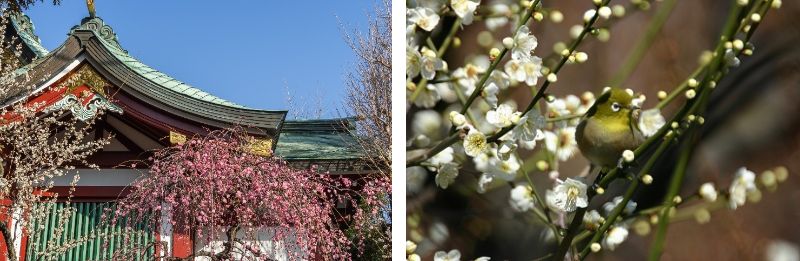
It is well known that Sugawara no Michizane was especially fond of plum blossoms and has been mentioned in many traditional Japanese poems. Because of this, over 300 plum trees were planted in on the shrine grounds, covering the area in red and white as the flowers bloom which signal the arrival of Spring. The Plum Blossom Festival is held for a month starting from early February, celebrating the arrival of the blossoming flowers. Once the plum fruits are rip in June, they are harvested by the shrine priests and made into plum wine and umeboshi, or pickled plum.
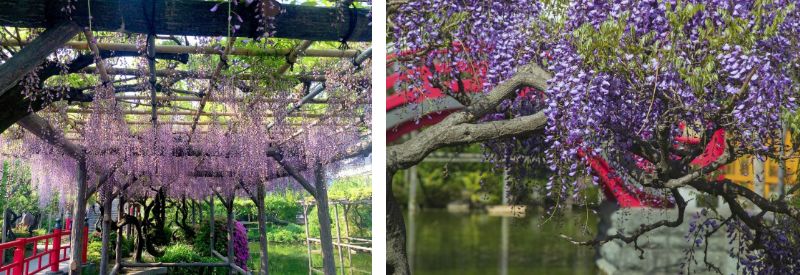
Once the plum flowers have passed, late April brings the arrival of the wisteria flowers which bloom all together. The lovely light purple flowers hang from the open rafters above, swaying in the wind, a scenery that attracts many flower enthusiasts. Kameido Tenjin has been the go-to wisteria spot since the Edo Period and loved by all, including the aristocrats of the past. As a result, it is dubbed as “the most famous wisteria spot in Tokyo”. Additionally, the heart-shaped pond that sits under the wisteria terrace provides visitors with a unique scene as the wisteria flowers reflect off the water surface, one that can only be found at Kameido Tenjin.
Festivals to Commemorate the Local Flowers
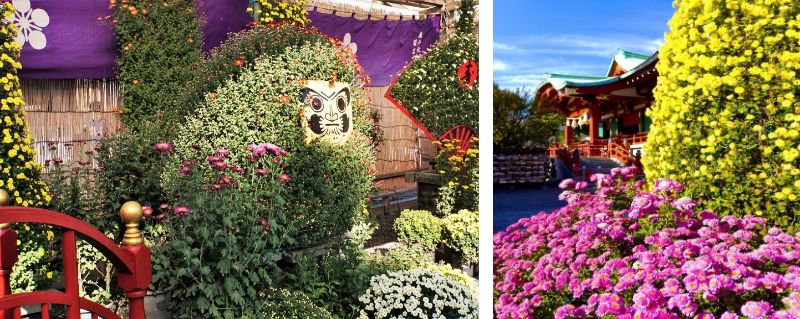
Autumn introduces the chrysanthemum flowers that are also planted through out the precinct of the shrine. The Chrysanthemum Festival is held annually from late October to late November, bringing in locals and tourists alike. The festival holds concerts, arts and crafts made from chrysanthemum flowers, and vendors that sell the flowers themselves. There are various types of chrysanthemum flowers that can be purchased including ones in bonsai-style and a straight-lined larger chrysanthemum flowers.